
FORGED STEEL AND 3000 CLASS FITTINGS
Jump Links:
- Overview – Category Overview
- Applications – Common Uses
- Technical – Specs & Standards
- Industries – Sector Utilization
- Integration – System Integration
Internal Links:
- /forged-steel-and-3000-class-fittings
- /forged-steel-and-3000-class-fittings-bushings
- /forged-steel-and-3000-class-fittings-couplings
- /forged-steel-and-3000-class-fittings-elbows
- /forged-steel-and-3000-class-fittings-plugs
- /forged-steel-and-3000-class-fittings-tees
- /forged-steel-and-3000-class-fittings-unions
Overview
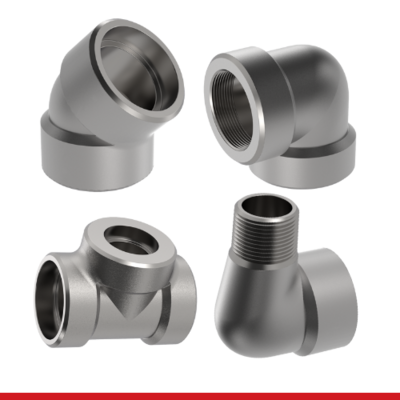
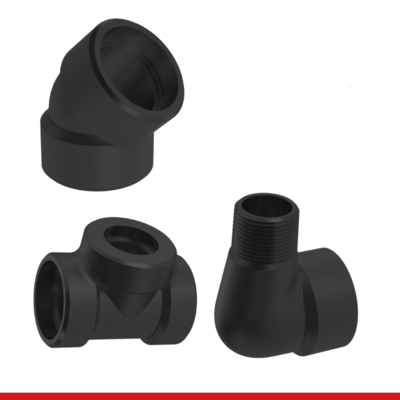
Forged steel 3000-class fittings provide extremely high mechanical strength, pressure containment, and impact resistance for heavy-duty industrial piping systems. Manufactured through hot forging and precision machining, these fittings maintain consistent grain structure, superior tensile strength, and long-term durability under demanding thermal and mechanical loads.
Commonly used in oil, gas, steam, hydraulic, and chemical processing systems, forged fittings exceed the performance of cast components and are chosen when safety margins and mechanical reliability are critical.
Available in threaded (NPT) and socket-weld configurations, forged fittings offer flexibility for serviceable or permanent installations. Their compact geometry allows tight system layouts without compromising flow integrity or structural strength.
Engineers rely on forged fittings for pressure manifolds, pump discharge networks, high-pressure valve stations, instrumentation tie-ins, and severe service applications.
Makers and technical builders use forged fittings for high-pressure test rigs, hydraulic systems, steam circuits, and heavy mechanical prototype environments requiring predictable mechanical behavior.